Reggio Emilia-Inspired,
Every Day
Short on theory, long on listening. This is how our educators work with children, and why.
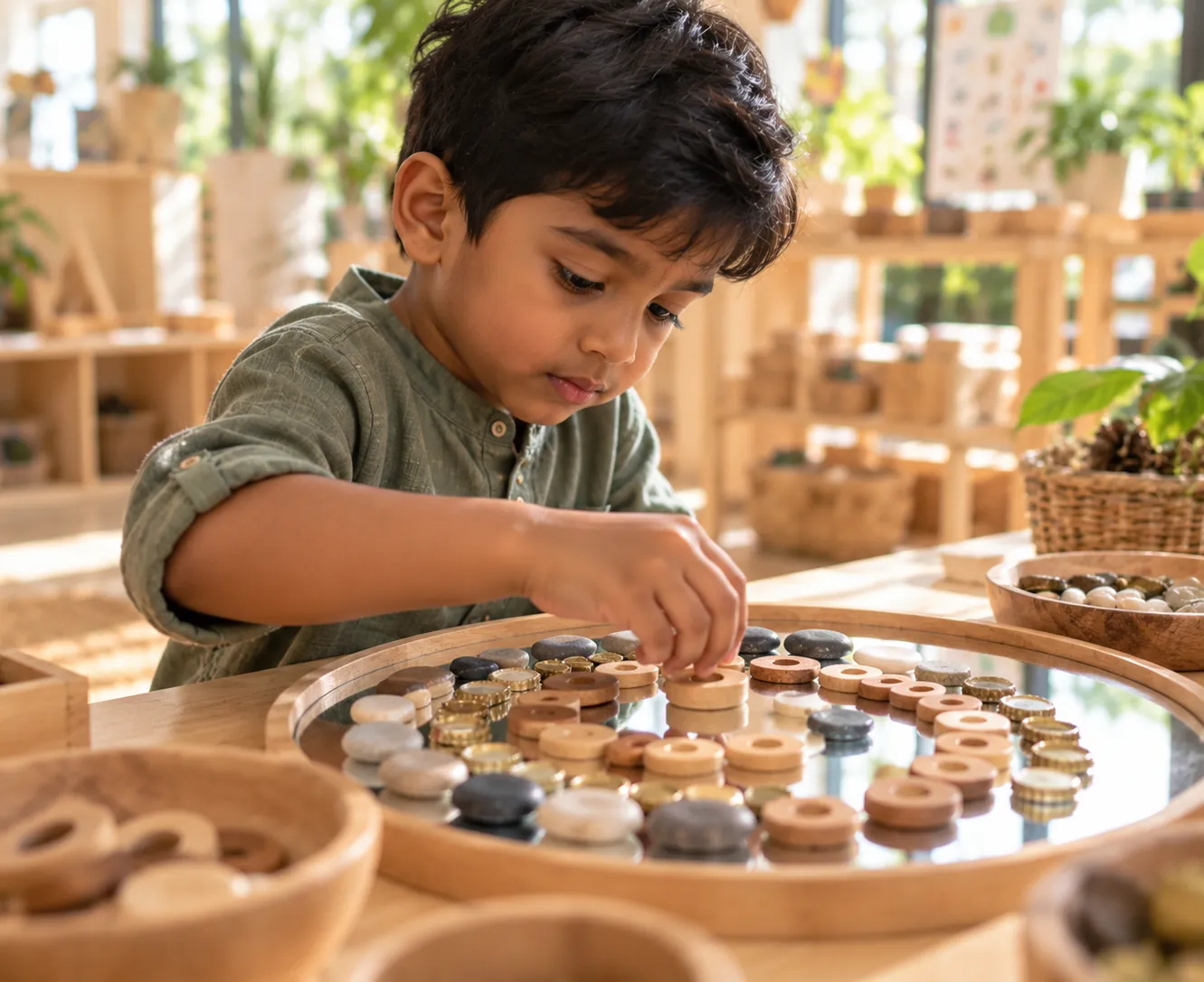
Our Image of the Child
We believe every child is born with knowledge, curiosity and ideas worth hearing. The child is competent, creative and confident, and our work begins by paying attention.
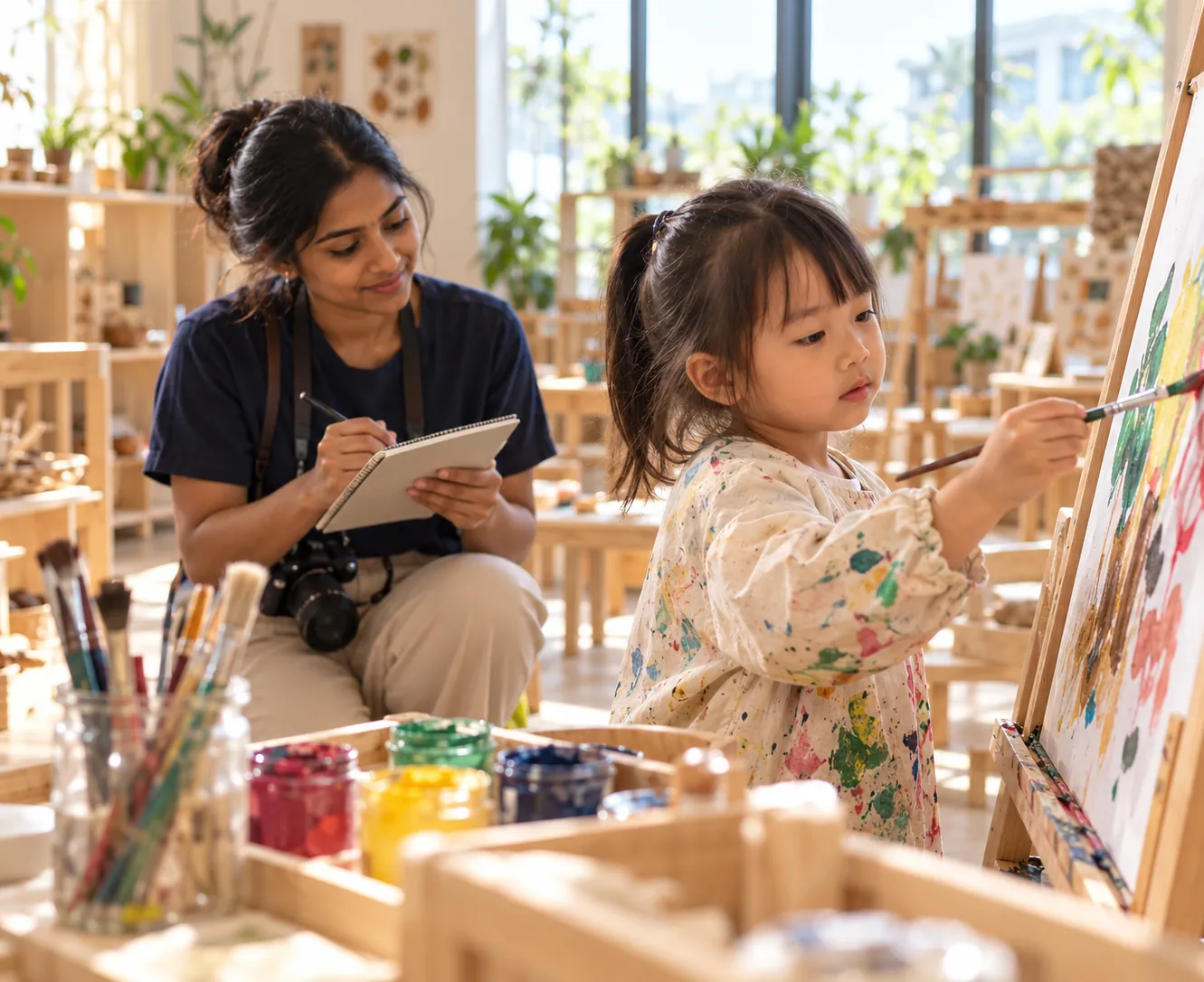
Our Reggio Emilia-Inspired Practice
Our educators have adopted the best practices of the Reggio Emilia schools in Italy. Learning is built together: by children, educators, families and the wider community.
The focus is on the process, not the product.

In the Children’s Words
Recorded by our educators, as the children said them.
“Teacher Janelle is in the garden, looking at flowers and the butterflies. Her heart is shining and she has a smiling face.”Six-year-olds, on their teacher
“She is an experienced story teller who helped us to become confident. It's important to be confident because you will be calm and won't be afraid.”A six-year-old, on Teacher Rabiyah
“Aunty Khong cooks for us every day. She is happy because the other Aunties are helping her.”Five-year-olds, on the Centre's cook
Six Ideas Behind Every Day
Play and Inquiry
Children ask real questions, form their own theories and test them. Educators welcome uncertainty and value the question as much as the answer.
The Hundred Languages of Children
Drawing, clay, wire, music, dance, light and words: each is a language, and each gives a child another way to think.
Educators as Researchers
Educators observe, collect evidence of learning and study it together, then plan the next step with the children.
Pedagogical Documentation
Photographs, transcripts and children’s work make thinking visible, so families see how their child thinks, not only what they made.
Families as Partners
Parents are part of the learning: sharing ideas, joining projects and reading the documentation of their child’s investigations.
The Environment as Third Teacher
Light, natural materials and open spaces invite children to explore, and every space is arranged with intent.
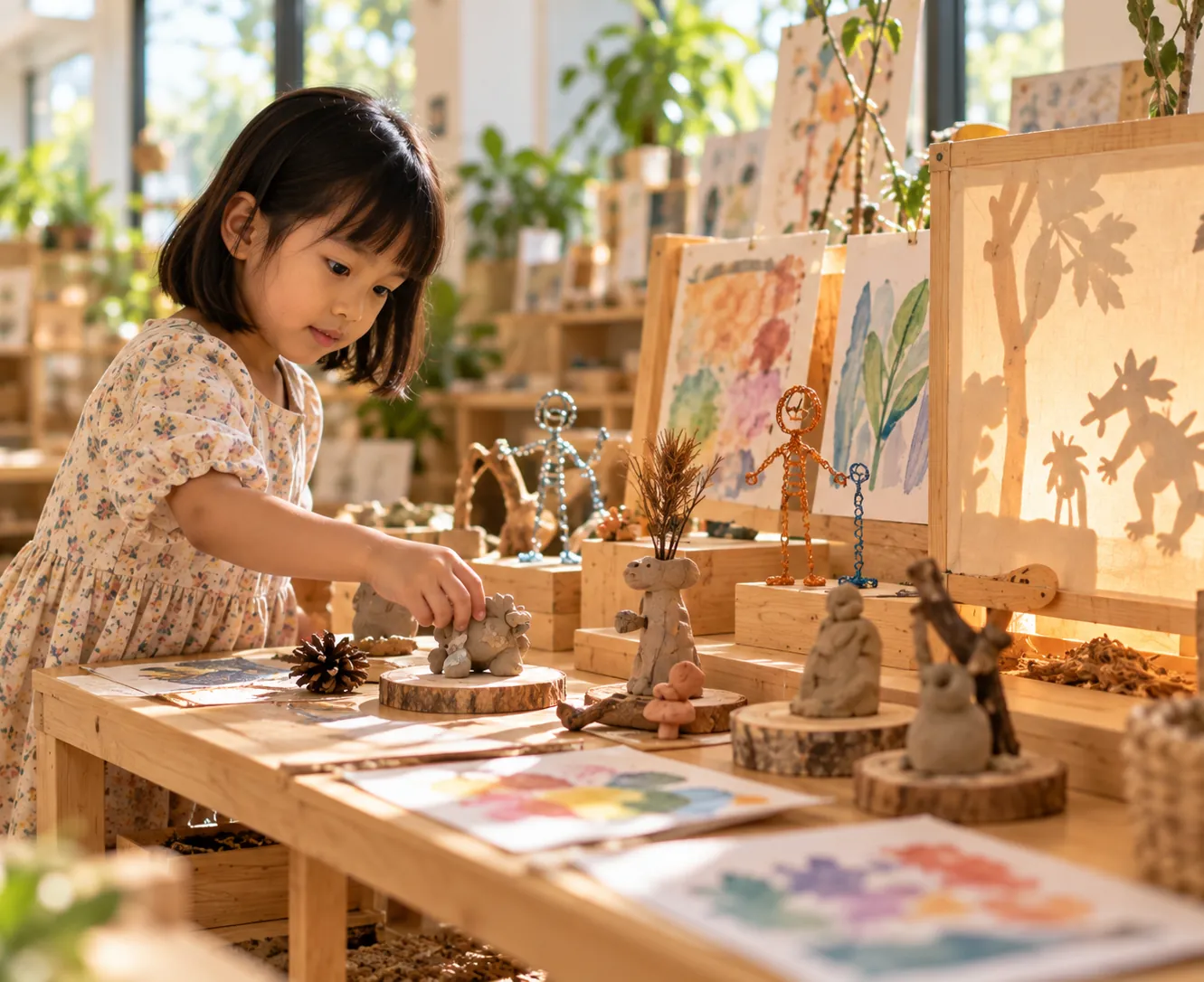
The Hundred Languages
A child who cannot yet write a sentence can still build an idea in clay, draw a theory or dance a story. We give every one of those languages a place in the day.
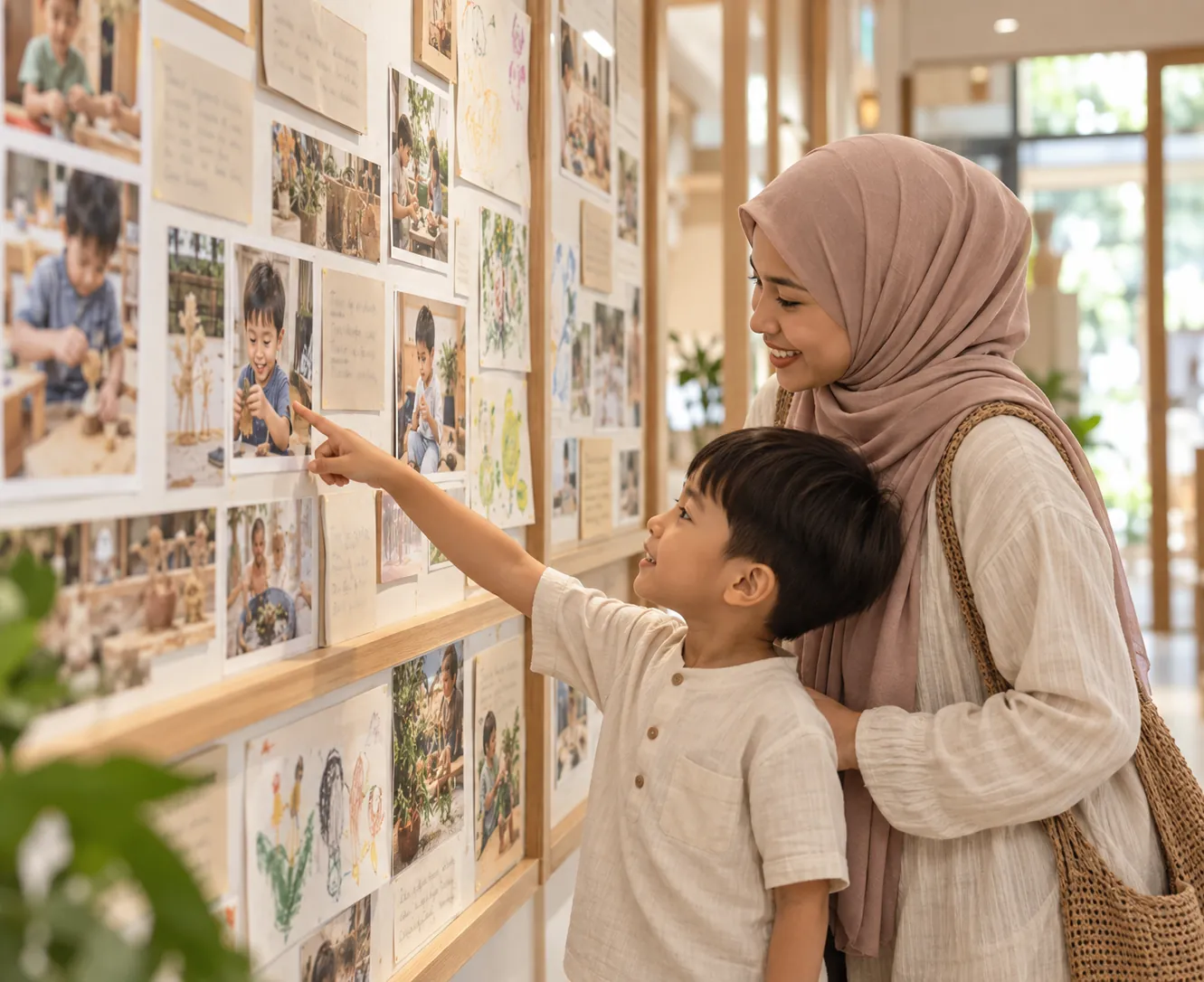
Documentation You Can Read
Our walls carry photographs, children’s drawings and their own words, recorded by educators. Families read their child’s thinking as it develops.
It is not important what children create, but that they do create.Lev Vygotsky, developmental psychologist, quoted in our pedagogy
See Our Approach at Work
Visit a classroom in session and see how children and educators learn together.